South Africa’s infrastructure spending to top $582bn through 2050 – PwC

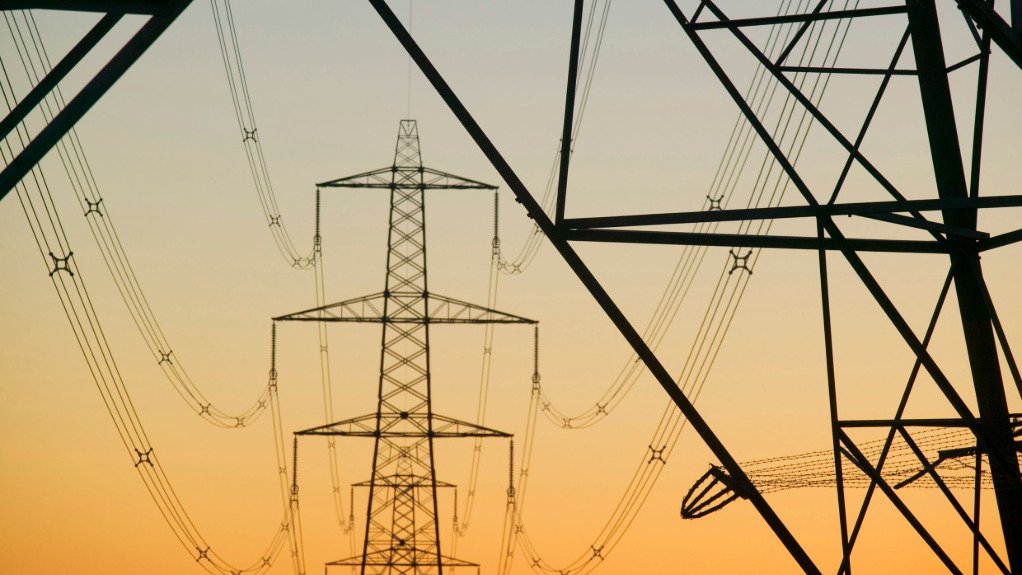



Over the next 25 years, infrastructure investment in South Africa is forecast to be led by transport, resources and power, which together account for 63% of total infrastructure spend through to 2050, audit and assurance firm PwC’s ‘Global Infrastructure Outlook 2025 – 2050’ report shows.
PwC says the analysis is the first of its kind to offer long-term infrastructure spending forecasts to 2050 across nine sectors, 20 subsectors and 45 countries and territories, representing 88% of global economic output.
It draws on the past 20 years of spending data and models future investment based on economic and policy factors.
The outlook highlights that investment in power, transport and digital infrastructure will increasingly converge to create more intelligent networks, with traditional assets operating as part of connected, digitally-enabled and electrified systems.
Globally, PwC says, infrastructure is entering an unprecedented investment cycle, with yearly spending forecast to rise from $4.4-trillion in 2024 to $6.9-trillion in 2050.
As countries modernise transport, power and industrial systems to meet the demands of AI, electrification and urbanisation, cumulative global investment is projected to reach $151.1-trillion over the period, the report indicates.
The outlook suggests that global infrastructure spending over the next 25 years will be double that of the previous 20 years, before which comparable data is unavailable.
“The scale of infrastructure investment needed over the next 25 years has the potential to take infrastructure beyond just an assemblage of roads, railway lines, pipes, power lines and concrete structures to a fundamentally transformed ecosystem: smarter, more resilient and interconnected across physical, digital, environmental and social systems.
“This won’t be automatic. It will take ingenuity, smart prioritisation of resources, exceptional public and private sector collaboration and acceleration of the institutional reforms in progress,” says PwC South Africa infrastructure leader Jarendra Reddy.
PwC explains that yearly infrastructure spending in South Africa is forecast to grow 39% from current levels to $26-billion by 2050.
Under the baseline outlook, cumulative investment totals $582-billion between 2025 and 2050.
The report indicates that renewed government policy support for infrastructure and institutional reform provide upside to the outlook, adding that the National Infrastructure Plan 2050 outlines a phased approach to developing core network infrastructure followed by social infrastructure.
PwC points out that transport infrastructure is the largest sector in terms of total spend, equal to $155-billion between 2025 to 2050 – 27% of total spend.
This is followed by resources infrastructure, with total spend of $128-billion over the same period. Power infrastructure spend totals $83-billion over 2025 to 2050.
Together, these three sectors account for 63% of South Africa's infrastructure spend through to 2050.
Digital infrastructure is the next largest, the report says, with total spend of $71-billion, then social a $57-billion, water at $30-billion, agriculture at $28-billion, industrial at $26-billion and defence at $4.3-billion over 2025 to 2050.
DATA CENTRES
Additionally, as the world races to unlock the full potential of AI, PwC says a surge in spending on data centre buildings is rapidly unfolding and comes in addition to investment in information and communications technology (ICT) equipment, such as chips and servers.
Between 2024 and 2027, the report says yearly investment in data centre buildings will rise from $113.8-billion to $251.8-billion.
Total investment from 2024 to 2032 will top $1.5-trillion in a remarkable short-term escalation, which will be followed by a period focused on improving the utilisation, efficiency, and adaptability of existing built stock.
Over the full period, other key subsectors will see significant growth.
For example, PwC says aging populations are expected to drive yearly spending on health and aged care facilities 1.7 times higher by 2050 – $441-billion – for the first time coming close to parity with spending on educational facilities – forecast to be $471-billion by 2050.
The report says the resources sector shows mainly targeted growth in mining for metals and minerals that are critical for the energy transition, such as copper, lithium and rare earths, where yearly spending will rise 1.4 times to $128-billion in 2050.
GLOBAL TRENDS
Meanwhile, PwC says Asia Pacific will remain the engine of global infrastructure activity, accounting for more than half of total investment through to 2050, propelled by urbanisation, industrial expansion and rapid build-out of power and digital networks.
The report indicates that Africa will see the world’s fastest-growing infrastructure investment rate, with yearly spending to increase nearly 1.8 times by 2050, reflecting demographic change and significant infrastructure gaps.
Elsewhere, Europe and North America are entering a period of renewal as ageing transport, energy and water systems require large-scale modernisation to remain resilient and competitive.
PwC says yearly infrastructure spending is forecast to rise 1.6 times by 2050 across the Americas and 1.4 times in Europe, noting that the regional contrasts will shape where capital flows and delivery capability becomes most critical.
PwC argues, however, that mobilising capital alone will not guarantee success.
The firm explains that execution risk, fragmented planning, inconsistent community engagement, supply-chain vulnerability and outdated delivery models could dilute the economic impact of the unprecedented investment volumes.
The outlook thus highlights key priorities, including system-level planning; and coordinating investment across power, digital, transport, water and industrial systems to avoid bottlenecks, reduce red tape and unlock productivity gains.
A key priority also includes new financing and partnership models, including capital recycling and standardised blended-finance platforms to mobilise long-term private capital and derisk new technologies so more projects become bankable, especially in emerging markets.
Modern delivery and commercial models, with outcome-based contracting, digital twins, modular construction and AI-enabled project controls improving speed, certainty and performance, are also cited as a key priority.
“Africa stands at the threshold of a transformative era in infrastructure investment, potentially leading the world in growth over the next quarter-century.
“Driven by demographic change and rapid urbanisation, this is more than just mobilising capital; it is a generational opportunity to embed long-term strategies, forge future-ready, locally relevant infrastructure solutions, and revolutionise project delivery with digital and AI-driven solutions.
“By embracing forward-thinking commercial approaches and smart financing partnerships, Africa can secure a resilient and prosperous future”, says Reddy.
Article Enquiry
Email Article
Save Article
Feedback
To advertise email advertising@creamermedia.co.za or click here
Research Reports

Projects


Latest Multimedia

Latest News

Showroom

For over 60 years, VEGA has provided industry-leading products for the measurement of level, density, weight and pressure. As the inventor of the...
VISIT SHOWROOM
Multotec, recognised industry leaders in metallurgy and process engineering help mining houses across the world process minerals more efficiently,...
VISIT SHOWROOM



Press Office
Announcements
What's On
Subscribe to improve your user experience...
Option 1 (equivalent of R125 a month):
Receive a weekly copy of Creamer Media's Engineering News & Mining Weekly magazine
(print copy for those in South Africa and e-magazine for those outside of South Africa)
Receive daily email newsletters
Access to full search results
Access archive of magazine back copies
Access to Projects in Progress
Access to ONE Research Report of your choice in PDF format
Option 2 (equivalent of R375 a month):
All benefits from Option 1
PLUS
Access to Creamer Media's Research Channel Africa for ALL Research Reports, in PDF format, on various industrial and mining sectors
including Electricity; Water; Energy Transition; Hydrogen; Roads, Rail and Ports; Coal; Gold; Platinum; Battery Metals; etc.
Already a subscriber?
Forgotten your password?
Receive weekly copy of Creamer Media's Engineering News & Mining Weekly magazine (print copy for those in South Africa and e-magazine for those outside of South Africa)
➕
Recieve daily email newsletters
➕
Access to full search results
➕
Access archive of magazine back copies
➕
Access to Projects in Progress
➕
Access to ONE Research Report of your choice in PDF format
RESEARCH CHANNEL AFRICA
R4500 (equivalent of R375 a month)
SUBSCRIBEAll benefits from Option 1
➕
Access to Creamer Media's Research Channel Africa for ALL Research Reports on various industrial and mining sectors, in PDF format, including on:
Electricity
➕
Water
➕
Energy Transition
➕
Hydrogen
➕
Roads, Rail and Ports
➕
Coal
➕
Gold
➕
Platinum
➕
Battery Metals
➕
etc.
Receive all benefits from Option 1 or Option 2 delivered to numerous people at your company
➕
Multiple User names and Passwords for simultaneous log-ins
➕
Intranet integration access to all in your organisation